
What Is Teff + How To Use It In Recipes
Teff was one of the earliest domesticated plants. It's edible seeds are gluten free and can be used in baked goods, ground into flour, used as the base of a bowl or crumbled to create delicious, nutritious and protein-packed meatless crumbles.
It's easy to cook teff on the stove and it has a mild flavor, which means you can easily add flavor by cooking it with herbs and spices, or in broths. You can find teff grains sold in the gluten free section of major grocery stores and online.
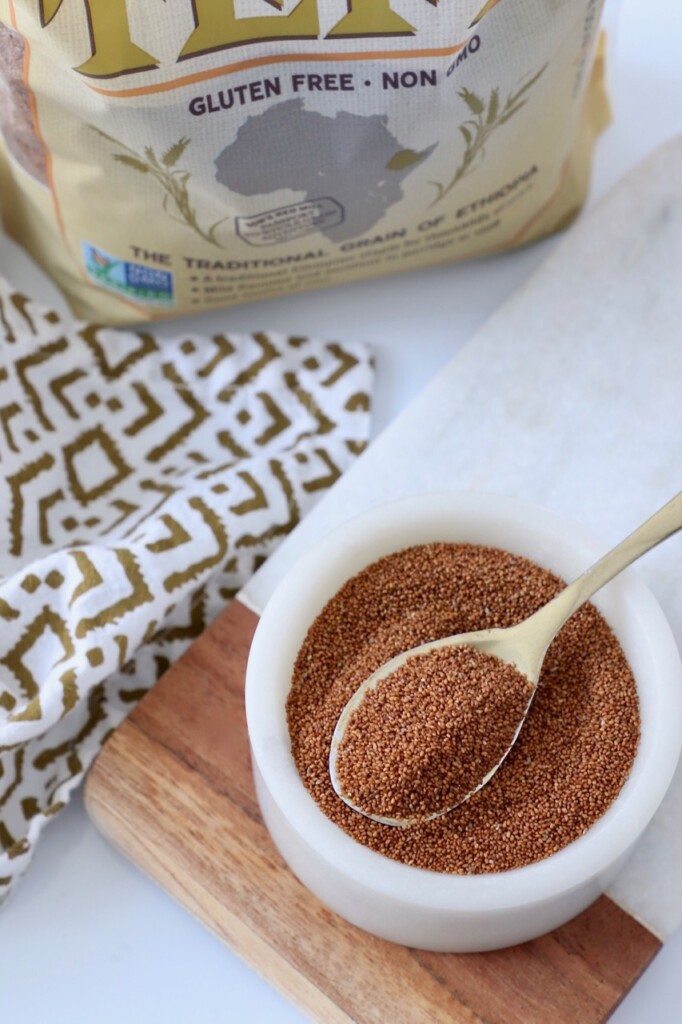
More and more ancient grains are becoming staples in our home kitchens. These foods are easy and fun to work into your diet for more nutrition and variety.
One of these is what is known as teff, a seed that comes from the Eragrostis tef plant, also known as Williams' lovegrass. Teff has been cultivated in Ethiopia and Eritrea for centuries, and is said to be the first ever domesticated grain!
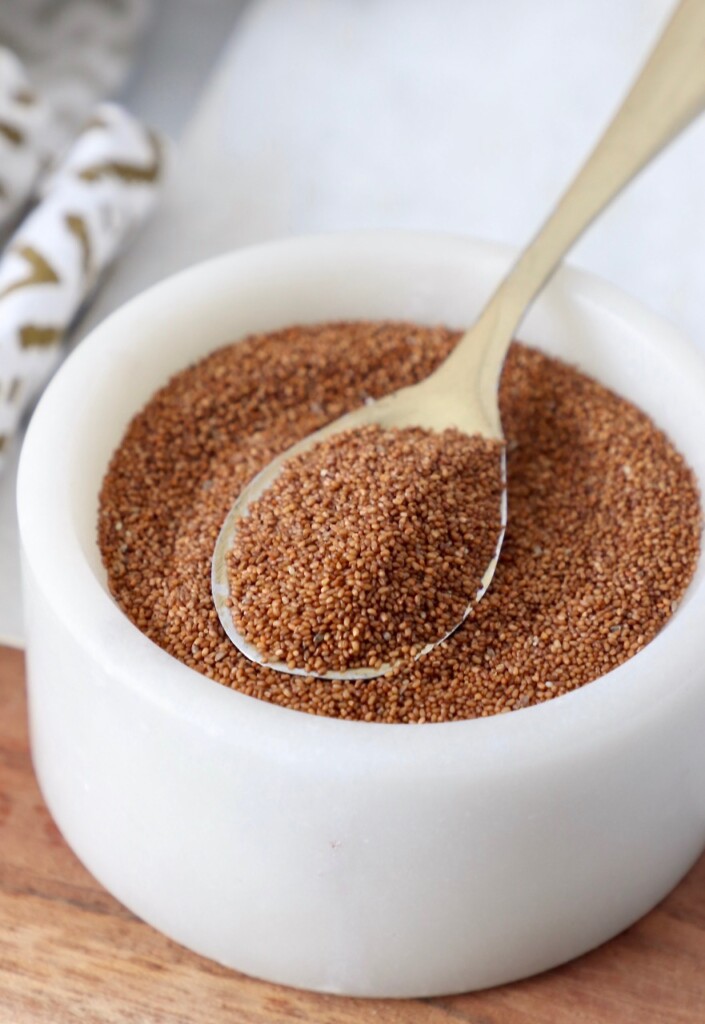
The size of the seed is similar to cornmeal or poppy seeds and can be used whole or ground into flour. In fact, this whole grain is a staple in Ethiopian cuisine used to make everything from bread, to porridge, to drinks.
Don't let the small size fool you though, it's packed with vitamins, minerals, dietary fiber, protein, and essential amino acids!
So read on to learn why you should start eating teff, how to cook it on the stovetop, and how to enjoy it in recipes!
Jump to:
Health benefits
Even though teff is the smallest grain, it packs in a ton of nutrients! Just ¼ cup includes 170 calories, 5 grams of protein, 8 grams of carbohydrates, and 2 grams of dietary fiber. The dietary fiber in teff is a resistant starch, which can help with blood sugar management, weight control and colon health.
The essential amino acid lysine is also present, which is often not the case for other grains. Lysine is good for calcium absorption, supporting your immune system, producing energy, as well as helping out with collagen, hormone, and antibodies production.
Teff has a relatively low glycemic index, which means it's less likely to spike your blood sugar levels. It's naturally gluten free, making the flour an excellent addition to any gluten free pantry.
It's also a good source of iron and calcium, as well as magnesium, copper, potassium, manganese, and zinc.
What does teff taste like?
Teff is similar to other grains in that it's flavor is mild, earthy and nutty. The taste will be slightly different depending on which variety you choose, some even have hints of hazelnut or chocolate.
Different varieties of teff
You will find a few different types of this whole grain including:
- Ivory or white - This light-colored type has the most mild flavor, and is the most expensive variety.
- Red or brown - These seeds are darker in color and range from red to brown, and have the highest iron content.
- Mixed - This is simply a combination of the different types of teff all mixed together.
Frequently asked questions
- Is teff a grain or a seed? Technically speaking, it is a small grass seed. However, when it comes to food it is classified as a whole grain.
- Is teff gluten free? Yes, this grain is naturally gluten free.
- How do you store teff? Keep uncooked teff in a cool dry place in an airtight container. The grains will keep for up to 2 years, while the flour form will stay good for up to 1 year. Once cooked, keep the teff in an airtight container in the refrigerator for up to 4 days. It is not recommended to freeze teff, as the texture can get a bit mushy once defrosted.
- Where does teff come from? It is native to Ethiopia and Eritrea in Africa, where it is their most important staple crop. In more recent years it has started to be cultivated in the United States as well in Idaho, Nevada, California and Texas.
Where to buy teff
Teff is a bit pricier than other whole grains because of the difficult way it is harvested. However, with all the nutritional benefits you get quite the 'bang for your buck'!
Check your local grocery store or natural foods store next to other grains like quinoa, or in either the cereal aisle next to the oatmeal, or in the baking aisle.
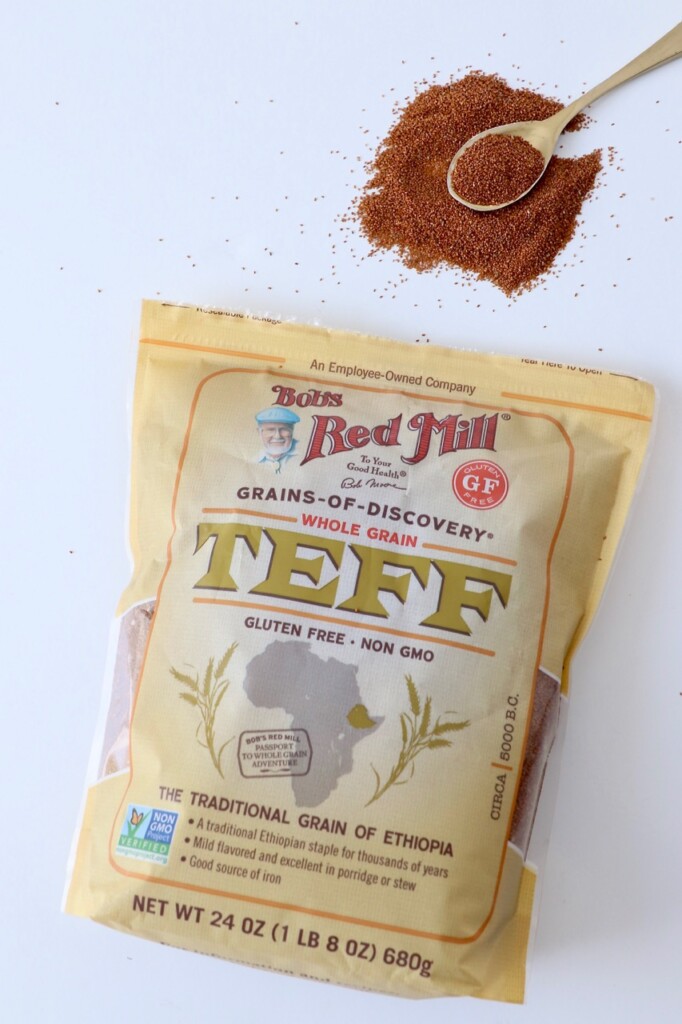
If you don't have luck locally, it is easy to find online. I purchased the bag of Bob's Red Mill Teff that you see pictured throughout this post on Amazon.
How to cook it on the stovetop
- Boil water with salt in a medium sauce pan.
- Add the teff and stir to make sure it's all covered in the water.
- Reduce to a simmer, cover with a lid and cook until the water is absorbed, about 15-20 minutes.
- Remove from the heat. Use a fork to fluff the grains, then cover with a lid and let it sit for 10 minutes before serving.
To add extra flavor to the teff when cooking it on the stove, feel free to use vegetable or chicken broth instead of water. You can also add other herbs and spices in addition to the salt.
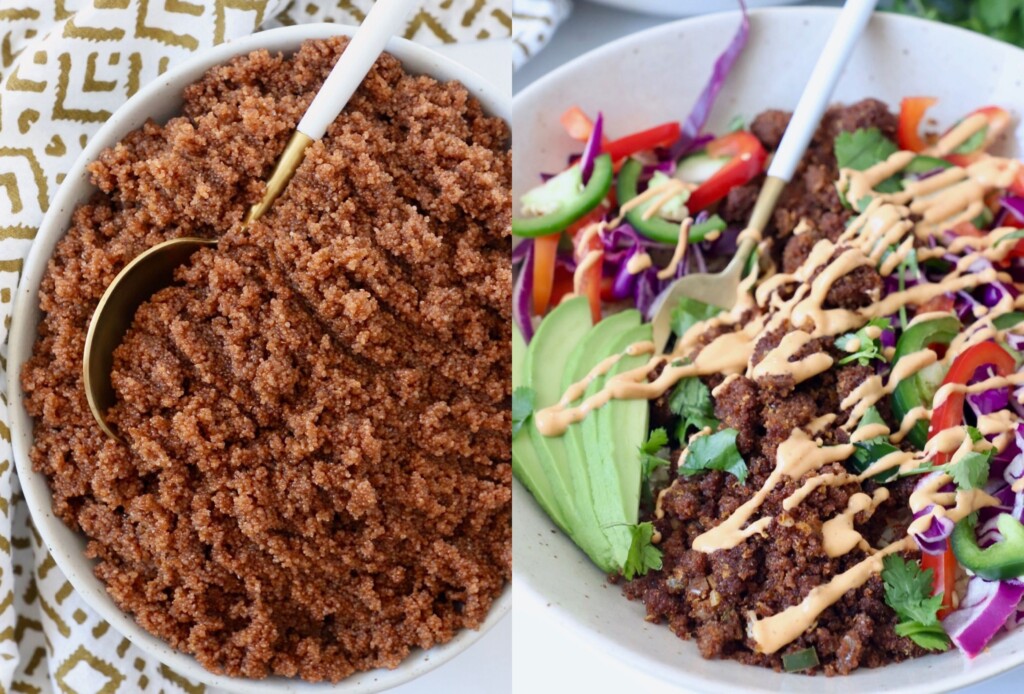
How to use it in recipes
Teff can be eaten whole once it's cooked, much like rice or quinoa. It can also be cooked into other recipes. Teff flour is also a great gluten free flour alternative! Here are some ideas to get you started.
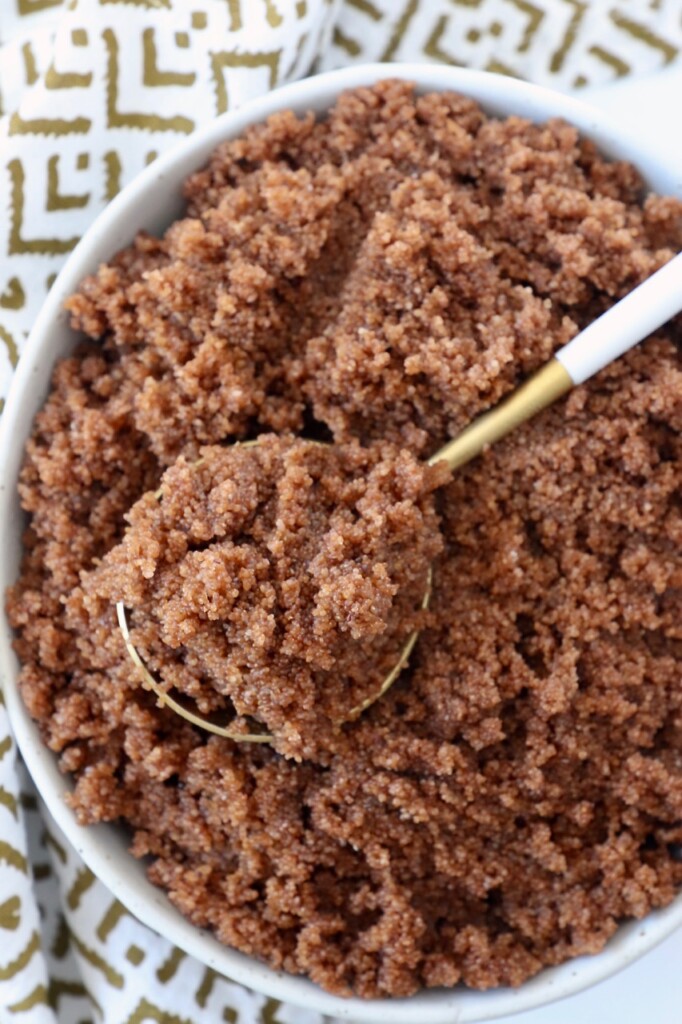
- Make vegan taco meat for taco bowls (pictured above)!
- Pair 3 Ingredient Teff Crackers with Spicy Sriracha Hummus, Whipped Feta Dip or Vegan Avocado Ranch Dip.
- Snack on Teff Flour Muffins.
- Start your day off with Teff Waffles.
- Satisfy your sweet tooth with Gluten Free Oatmeal Teff Cookies or Teff Almond Butter Cookies.
- Try the Ethipoian flatbread Injera or make a Soft, Fluffy Teff Bread.
- Make a nutritious porridge like Banana Almond Teff Porridge.
- Mix into soups or stews, or make the classic Ethiopian stew Wat.
- Use it like polenta Teff "Polenta" Bowls with Soft Eggs and Greens
- Top salads, soups, veggies, or even oatmeal for a healthy crunch.
You can also swap out quinoa in the following bowls with cooked teff.
- Italian Bowls with Roasted Vegetables
- Asian Tempeh Bowls
- Chipotle Taco Bowls
- Harissa Chicken Bowl
- Caribbean Jerk Chicken Bowls
- Roasted Summer Squash Bowls
Recipe
How To Cook Teff
Ingredients
- 1 ½ cups water or broth
- ½ teaspoon salt
- 1 cup teff
Instructions
- Bring the water and salt to a boil in a medium sauce pan.
- Add the teff and stir to combine.
- Reduce to a simmer, cover and cook until water is absorbed, 15-20 minutes.
- Remove from the heat, fluff with a fork and let sit, covered, for 10 minutes.
Notes
- Once cooked, keep the teff in an airtight container in the refrigerator for up to 4 days. It is not recommended to freeze teff, as the texture can get a bit mushy once defrosted.
- To add extra flavor to the teff when cooking it on the stove, feel free to use vegetable or chicken broth instead of water. You can also add other herbs and spices in addition to the salt.
I really enjoy teff but find it hard to cook without watching closely on the stove. I have tried the Instapot a couple of times and that is a mess. Overnight in the crockpot works well but our little crockpot is a bit too hot even on low. Believe it or not, it cooks best on our wood stove in a pot on a trivet to produce a nice slow cook. Thank you for your helpful article.